
How should you choose a StudyFetch alternative?
Choosing a StudyFetch alternative starts with identifying the study task that needs replacing: lecture capture, note preparation, flashcards, source-based questions or exam practice. Compare candidate tools using the same permitted course material and check the resulting explanations and questions. Current plan limits, source access and export options matter more than a universal ranking.
Key takeaways
- Choose the essential workflow before comparing product feature lists.
- Test answer quality against your own source material.
- Check current pricing, upload limits and export access with each provider.
StudyFetch combines lecture capture, notes, flashcards, quizzes, planning and an AI tutor. The best alternative depends on which part of that workflow matters most to you.
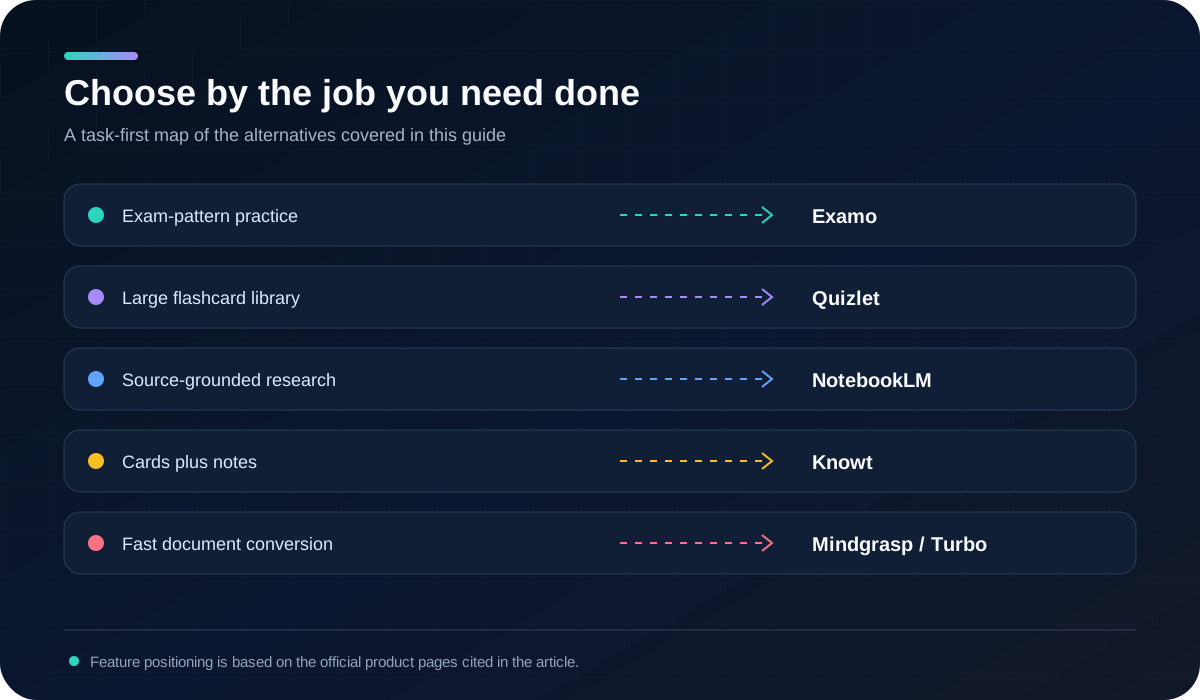
For a free flashcard-first option, start with Knowt. For source-grounded questions and citations, consider NotebookLM. For detailed spaced repetition, choose Anki. For course-based tutoring and exam practice, Examo is the closest fit in this comparison.
Examo publishes this comparison. Product access, prices and limits can change, so verify important details on each product's official website before subscribing.
StudyFetch alternatives at a glance
| Tool | Best for | Free access | Main trade-off |
|---|---|---|---|
| Examo | Course-based tutoring and exam practice | Free plan with usage limits | Works best when you have course material or a syllabus |
| Knowt | Notes, flashcards and familiar test modes | Free study features available | Less focused on full-course exam workflows |
| NotebookLM | Source-grounded research and citations | Standard access is available without payment | Built more for understanding sources than recreating exams |
| Quizlet | Flashcards and existing study sets | Free access with paid upgrades | Broader course orchestration is limited |
| Anki | Long-term spaced repetition | Free on desktop, web and Android | More manual setup and a paid iOS app |
| Turbo AI | Turning lectures and files into notes and quizzes | Free tier available | Centred on fast content conversion |
| Mindgrasp | Summaries and study material from uploads | Limited free access may be available | Better for condensing material than exam simulation |
Best for course-based exam practice: Examo
Examo keeps uploaded material, summaries, Loki AI tutoring, flashcards, Smart Notes, mind maps, cheat sheets and practice inside one course. It is useful when your problem is not simply making notes, but turning a syllabus and source material into a repeatable exam-preparation workflow.
The distinction is not the number of AI features. Each Examo tool has a defined learning role, so the content can adapt while the route through understanding, recall, application and feedback remains familiar. Read the fuller comparison of flexible AI and structured study.
Assessment analysis can use permitted sample questions to distinguish response format from paper structure and identify supported recurring traits such as command words, expected depth and marking logic. It then shapes new practice from the course instead of creating a generic quiz from one file.
Try Examo for free if you want tutoring and practice tied to the same course context.
Best free flashcard-style alternative: Knowt
Knowt is a practical StudyFetch alternative when your workflow begins with notes and ends with flashcards or practice tests. Its official lecture workflow supports recording or uploading lectures before creating notes, flashcards and questions (Knowt).
Choose Knowt when familiar flashcard study matters more than keeping an entire course, tutor and exam workflow connected.
Best for source-grounded research: NotebookLM
NotebookLM is designed around sources. Google says it supports PDFs, websites, audio, Google files, PowerPoint files and public YouTube URLs, then uses selected sources in chat (NotebookLM Help).
That makes it useful for reading-heavy modules where you need to trace an explanation back to a document. It is less direct when you need assessment patterning, answer grading or a structured mock-exam workflow.
Best for flashcard libraries: Quizlet
Quizlet remains a straightforward choice for flashcards, existing public sets and familiar Learn or Test-style revision. Its AI tools can also create study material from notes and documents (Quizlet).
Choose it when fast recall practice is the main requirement. Choose a course-based platform when cards must connect to tutoring, source material and written exam feedback.
Best for detailed spaced repetition: Anki
Anki gives students extensive control over card design and review scheduling. It is especially useful for subjects with a high recall load, but it expects more setup than an AI study workspace (Anki).
Use Anki if you want a durable memory system and are comfortable building or importing decks. It is not intended to replace lecture capture, source-grounded tutoring or a course workspace that keeps your material and practice together.
Best for lecture-to-notes conversion: Turbo AI
TurboLearn AI is now called Turbo AI. The company says the account, data, mobile apps and pricing carried across the name change (Turbo AI). Turbo AI turns lectures and uploaded material into notes, flashcards and quizzes.
Choose it when capturing and converting material quickly is the priority. Examo is more suitable when that material must remain organized by course and lead into exam-style practice.
How to choose
Pick the tool based on the next action you need:
- Understand and cite sources: NotebookLM
- Create free flashcards and tests: Knowt
- Use existing flashcard sets: Quizlet
- Build long-term recall: Anki
- Convert lectures quickly: Turbo AI
- Connect a course to tutoring and exam practice: Examo
Do not choose only by the number of features. Test one real lecture, PDF or course section and check whether the output leads naturally to the way you will be assessed.
Sources
- StudyFetch official website
- Knowt AI Lecture Note Taker
- NotebookLM supported sources
- Quizlet AI study tools
- Anki official website
- Turbo AI rebrand notice
Related comparison
If you are comparing answer-first tools rather than note generators, read the best legitimate Homeworkify alternatives discussed on Reddit.
Frequently asked questions
What is the best free StudyFetch alternative?
The best option depends on the job. NotebookLM is strong for source-grounded questions, Knowt for a free flashcard workflow, Anki for long-term recall, and Examo for connecting course material to tutoring and exam practice. Check each product's current limits before choosing.
Is StudyFetch free?
StudyFetch lets students start for free, while some features and higher usage require a paid plan. Limits and prices can change, so confirm them on StudyFetch's official website before subscribing.
Which StudyFetch alternative is best for PDFs and citations?
NotebookLM is a strong choice when you want answers tied back to uploaded sources. Examo is better suited when those PDFs need to become a structured course with tutoring, study tools and exam-focused practice.
Turn your material into a complete learning workspace.
Organise your material into a course, understand it through detailed summaries and Loki, then move into recall, practice, creation and revision without losing the course context.