
What does effective studying involve?
Effective studying combines understanding the material, retrieving it without help and checking whether it can be applied to a new question. A practical routine reviews a small topic, attempts recall, corrects errors and schedules another attempt after a gap. Progress is measured by independent explanations and answers, not the number of pages reread.
Key takeaways
- Set a specific learning outcome before each session.
- Use practice questions and explanations to expose gaps in understanding.
- Revisit difficult material across separate sessions rather than one long reread.
Studying effectively is crucial for academic success. It involves more than just reading textbooks or attending lectures.
To excel, students need to adopt the best ways to study. This includes using proven study strategies and honing essential study skills.
Understanding how to study efficiently can transform your academic journey. It can lead to better grades and deeper comprehension.
In this guide, we will explore various techniques to enhance your learning experience. From time management to active learning, these methods are designed to boost your performance.
Whether you're a student or an educator, these insights will help you achieve your academic goals.
Understanding the Foundations of Effective Studying
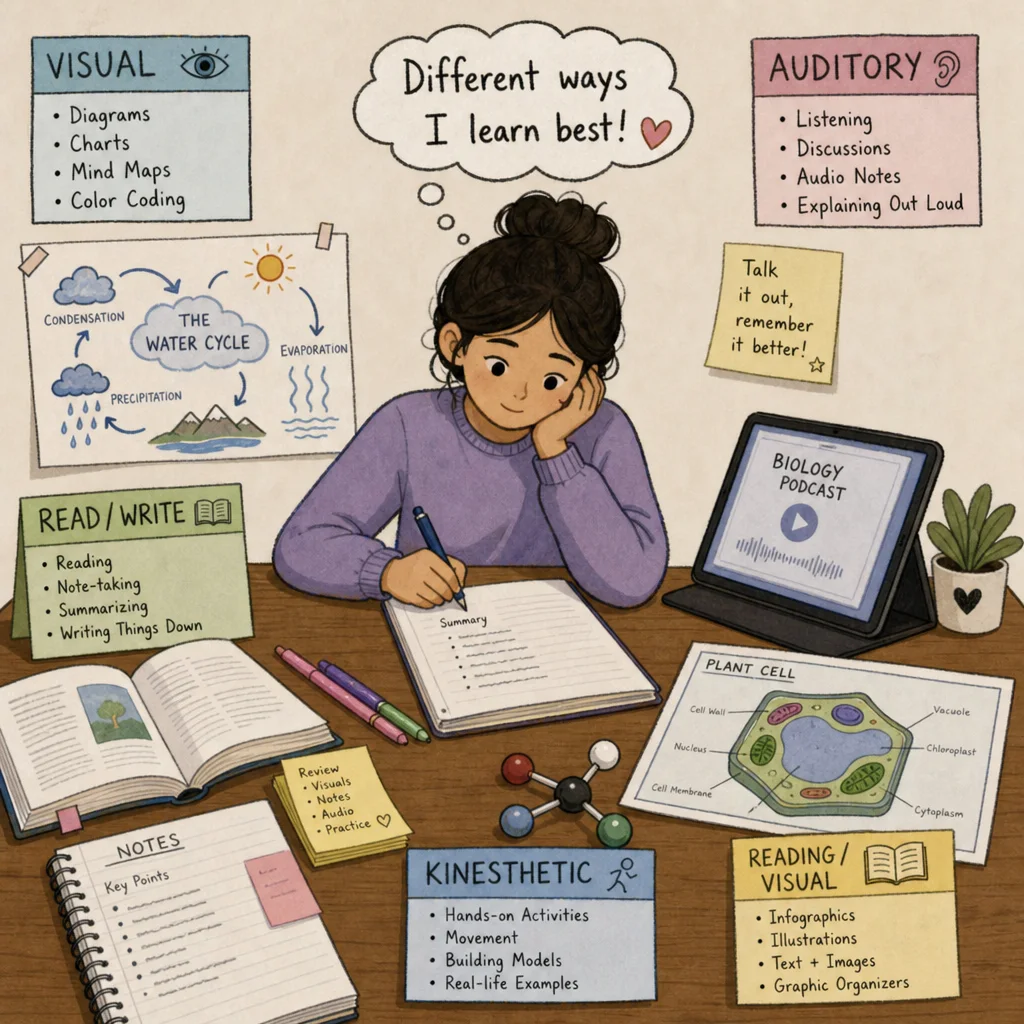
Effective studying begins with understanding what works best for you. Every learner is unique, and recognizing this can set the groundwork for success. Knowing your learning style, whether visual, auditory, or kinesthetic, can make a significant difference.
Building the right study habits is essential. It involves regular practice and a disciplined approach to your study sessions. Consistent effort over time leads to academic gains.
Additionally, setting clear, achievable goals can guide your study journey. These goals provide direction and help maintain motivation. Tracking progress towards these goals ensures a sense of accomplishment.
Key elements of effective studying include:
- Identifying your learning style
- Developing strong study habits
- Setting and achieving study goals
These foundational strategies lead to better learning outcomes. Understanding these principles prepares you to dive into more advanced techniques.
Most students never find out which style actually works for them, because trying each one means rebuilding the same material by hand. Try Examo for free and upload permitted course sources such as a syllabus, lecture slides, readings, or textbook chapters. You can add your own notes as extra context. Examo can then produce summaries for readers, audio recaps for auditory learners, mind maps for visual learners, and practice questions and flashcards for application-based learners who need to do something with the material. You can try all four on the same topic in an afternoon and keep whichever makes it stick.
Setting Up for Success: Study Environment and Planning
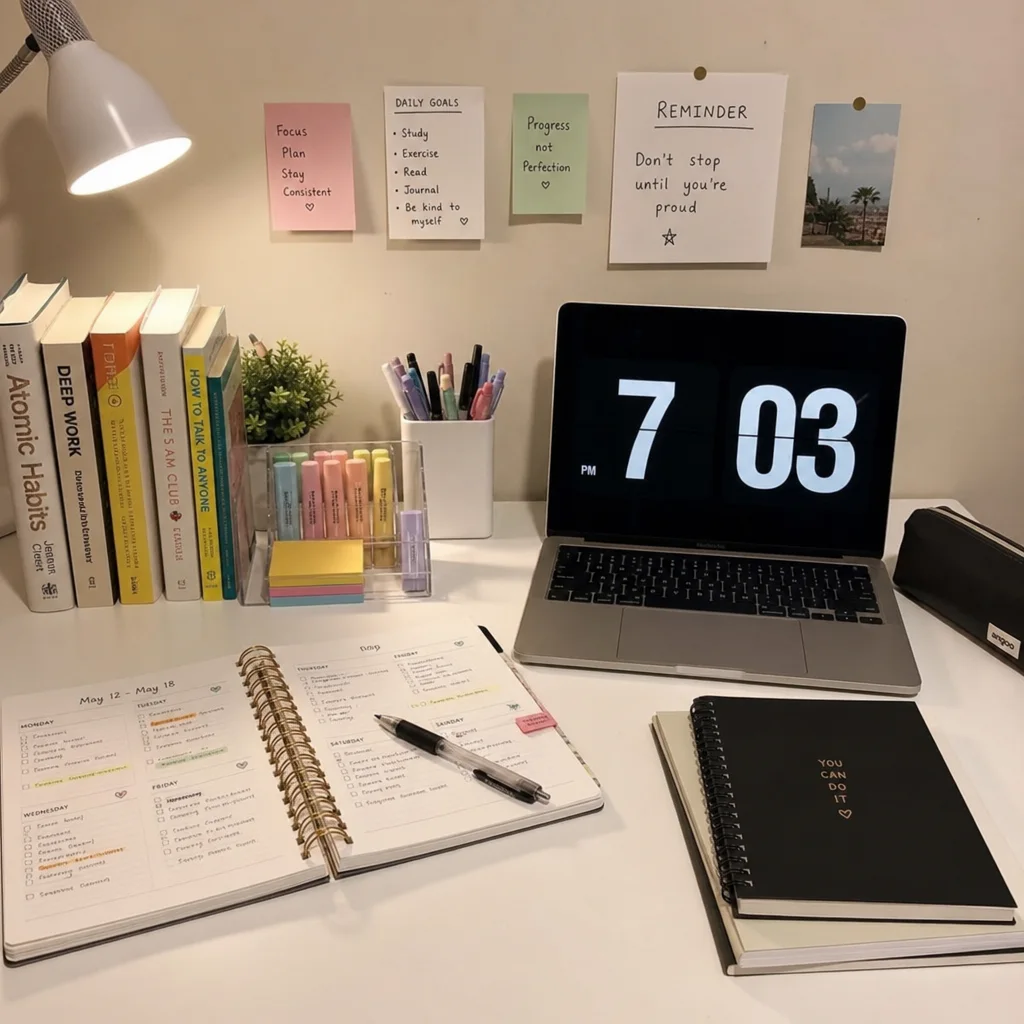
Creating an ideal study environment helps improve concentration and efficiency. A dedicated study space minimizes distractions and signals your brain that it's time to focus. This space should be comfortable, well-lit, and organized.
Effective planning is crucial for managing your study workload. Start by developing a study schedule that aligns with your peak concentration times. Consistency helps embed strong study habits into your routine.
Utilizing tools such as calendars or planners enhances organization. They help prioritize tasks and prevent cramming by outlining daily, weekly, and monthly objectives. Planning reduces stress and makes workload more manageable.
Key aspects of a conducive study setup include:
- Designing a distraction-free study space
- Scheduling based on peak productivity hours
- Using planners to track tasks and goals
Building a tailored study environment and plan sets the foundation for academic achievement. An organized space and structured schedule bolster your study efforts.
Time Management Strategies for Better Learning
Effective time management optimizes your study sessions. Organizing your day ensures you allocate enough time to each subject or task. Without a plan, important tasks might be missed.
The Pomodoro Technique is a popular method to manage study time. It involves studying for 25 minutes and taking a short break afterward. This helps maintain focus without feeling overwhelmed.
Setting priorities is key to handling your study load. The Eisenhower Box can assist you in identifying urgent tasks versus those that can wait. This method clarifies what needs your attention first.
Consider the following strategies to enhance your time management:
- Implement the Pomodoro Technique
- Prioritize tasks using the Eisenhower Box
- Allocate specific times for study and relaxation
Adopting these time management strategies can significantly improve your learning experience. They help in balancing study with leisure, maintaining your well-being.
Active Learning Techniques: Engaging with the Material
Active learning significantly boosts your understanding and memory. Unlike passive reading, active engagement challenges your brain to think deeply. This leads to better retention and application of knowledge.
One way to engage actively is by teaching the material to someone else. Explaining concepts in your own words strengthens your grasp. It reveals any gaps in your understanding.
Mind mapping is another effective method. This visual tool organizes information, making connections clearer. Seeing the bigger picture aids in comprehending complex topics.
Consider these active learning techniques:
- Summarize key ideas in your own words
- Teach the material to a peer or imaginary student
Additionally, practice retrieval exercises regularly. Self-quizzing is proven to enhance recall. It ensures the information is transferred to long-term memory. Loki AI can quiz you directly on your own course material when you want a quick self-test.
For a more dynamic approach, try different methods of engagement:
- Create detailed mind maps
- Participate in discussions or debates
Active learning transforms the way you interact with material. It encourages critical thinking and creativity. By embedding these techniques into your routine, you become an empowered, independent learner.
 by Google DeepMind (unsplash.com/@googledeepmind)
Memory Improvement and Retention Methods
Enhancing memory requires consistent effort and strategic practices. One potent method is spaced repetition. This technique involves reviewing material at increasing intervals over time. It combats forgetting and strengthens long-term retention.
Mnemonic devices can also be highly effective. These tools transform complex information into simple, memorable forms. For instance, using acronyms or vivid imagery can assist in remembering lists or sequences.
Consider incorporating visualization techniques. By associating new knowledge with strong visual cues, you enhance recall. Creating mental images or scenarios engages multiple senses, cementing information in your memory.
To aid memory retention, try the following methods:
- Use spaced repetition for reviewing material
- Employ mnemonic devices to simplify information
- Create visual associations for complex concepts
Consistent use of these strategies leads to improved memory performance. They transform studying into a more interactive and rewarding process. Cultivating such skills is key to academic success and lifelong learning.
Effective Note-Taking and Organization Skills
Effective note-taking is crucial for academic success. It involves more than just jotting down words. Structuring notes in a coherent and easy-to-review format makes them a valuable study tool.
One approach to enhance note-taking is the use of active reading strategies. Techniques such as highlighting key points and making annotations provide clarity and focus. These methods make it easier to review and internalize information later.
Furthermore, digital tools can aid in organizing notes. Apps and software offer features like tagging, search functions, and cloud storage. This keeps information accessible and organized, enhancing productivity and efficiency.
Consider these note-taking strategies:
- Highlighting and annotating key information
- Utilizing digital tools for organization
- Structuring notes clearly and concisely
 by Flipsnack (unsplash.com/@flipsnack)
Incorporating these skills into your study routine fosters a more efficient learning process. Effective note-taking and organization are fundamental to mastering new material and achieving academic goals.
Practice Testing and Self-Assessment
Practice testing is a proven method for improving retention and understanding. Frequent self-quizzing helps reinforce knowledge and identify weak areas. This method aids in developing effective recall techniques.
Self-assessment is equally important in the learning process. It involves reflecting on your study habits and outcomes. Identifying what works and what does not can guide adjustments for improvement.
Incorporating practice tests and self-assessment can be done in various ways:
- Use flashcards for quick recall
- Take practice exams to simulate test conditions
- Reflect on past performances to identify areas of improvement
These approaches not only prepare you for exams but also build confidence. Regular practice tests and self-evaluations enhance academic skills and pave the way for success.
If building the flashcards and practice exams yourself is what stops you, try Examo for free to generate both from your own course files: flashcards for quick recall and realistic practice for test conditions.
Collaborative and Group Study Strategies
Studying with others can offer unique benefits and perspectives. Collaboration enhances understanding through diverse insights. Group study sessions provide motivation and accountability.
Effective group study involves structure and clear objectives. Designate roles and responsibilities to ensure productivity. Setting specific goals for each session keeps everyone focused.
Consider these strategies for successful group study:
- Choose diverse group members for varied perspectives
- Set clear agendas and objectives before meetings
- Share resources and explain difficult concepts to peers
Engaging in group study can complement individual efforts. It encourages communication and collective problem-solving, enriching the overall learning experience.
Maintaining Focus, Motivation, and Well-Being
Sustaining focus during study sessions is crucial for academic success. Reducing distractions, like turning off notifications, can improve concentration. A dedicated, clutter-free study space helps maintain this focus.
Motivation can wane over time, so it's essential to find ways to stay inspired. Setting achievable goals and rewarding progress can boost motivation. Understanding the material's relevance can also keep engagement high.
Prioritizing well-being is vital to academic performance. Incorporate physical activity and ensure adequate sleep to maintain energy levels. Practice self-care to reduce stress and enhance cognitive function.
- Create a consistent sleep schedule
- Incorporate short exercise breaks
- Practice mindfulness or meditation regularly
 by Jaspinder Singh (unsplash.com/@jaspindersingh)
Balancing study with leisure activities ensures a healthy, sustainable study routine. This balance prevents burnout and supports long-term academic achievement.
Adapting and Personalizing Your Study Approach
Recognizing your unique learning style is key to personalizing your study techniques. Some people grasp concepts visually, while others prefer auditory or kinesthetic methods. Identifying what resonates with you helps maximize study efficiency.
Experimenting with different study techniques can reveal what aids your retention. Trying methods like flashcards, mind mapping, or storytelling can diversify your approach. This adaptability ensures you find what works best for each subject.
- Identify your learning style
- Experiment with varied techniques
- Adapt study methods per subject
Continuous reflection on your study habits is essential for improvement. Regular self-assessment can help pinpoint what needs adjustment. Personalized approaches often lead to more productive and satisfying study experiences.
Learning becomes easy when it is interactive and when switching styles costs you nothing. That is the point of building every format from one course: read the summary, listen to the audio version, map the topic visually, then test yourself on it - and let the results, not a quiz about learning styles, tell you what kind of learner you are. Explore public courses built from shared study material.
Conclusion: Building Lifelong Study Skills
Developing effective study techniques is a journey of growth. As you discover the best ways to study, these skills become a lifelong asset. Approaching studying with curiosity and openness fosters ongoing learning and adaptation.
Equipped with refined study strategies, academic success becomes more achievable. Beyond grades, these skills enhance problem-solving and critical thinking. Ultimately, cultivating strong study habits can positively impact all areas of life. By nurturing your study skills now, you set a foundation for a lifetime of learning and achievement.
A practical learning workflow: organise, practise, and act on gaps
Effective techniques work best as a repeatable study loop rather than a collection of disconnected tips. Begin with the material your lecturer actually gave you, turn it into manageable learning tasks, attempt those tasks from memory, and use the result to decide what deserves another session. The goal is to leave you able to explain and apply the material independently.
1. Build from the course you are taking
Create a course for the subject you are taking, then add a syllabus, lecture slides, readings, textbook chapters, or other permitted material inside it. You can add your own notes as extra context. Organise sections by week or topic and choose study tools for the material you add. Keep the source documents that define what your assessment can cover.
2. Turn reading into active practice
Use summaries and Smart Notes to orient yourself, then switch to recall. Flashcards, practice questions, mock exams, and short explanations work best after you first attempt an answer without help. When an answer is wrong, record whether the cause was missing knowledge, weak reasoning, a calculation error, or poor interpretation of the question. That diagnosis gives the next study block a clear job.
3. Ask Loki AI for the next useful step
Select the relevant course before asking a question and describe the level of explanation you need. Loki can clarify terminology, compare ideas, quiz you, or help plan revision from the chosen material. For actions such as creating a presentation, workbook, or revision plan, review the proposed scope and confirm it before the final artifact is produced.
4. Verify important claims and keep ownership
AI output can be incomplete or mistaken. Check facts, quotations, citations, calculations, and assessment requirements against your source material or another authoritative reference. Follow your institution's rules on permitted assistance, write submitted work in your own voice, and never upload confidential material that you are not authorised to use.
You can evaluate this workflow with one topic: organise the material, attempt one set of questions, ask for feedback on the mistakes, and return after a delay. Keep the parts that improve independent recall and remove the parts that only make the notes look busier. Your course requirements, available time, and actual results should decide the workflow.
Try Examo for free when you want to build the loop from your own notes or lecture slides.
Frequently asked questions
What is the most effective way to study?
Study a small section, close the material, retrieve it from memory, check the result, and revisit weak points after a gap. This combines active recall with spaced practice instead of relying on rereading alone.
How long should an effective study session last?
There is no universal ideal length. Choose a focused block you can sustain, set one clear outcome, take a short break, and adjust the next block based on your concentration and the task.
Which study techniques improve long-term memory?
Practice testing and distributed practice have strong evidence for long-term learning. Interleaving, worked examples, and explaining an idea in your own words can also help when they suit the subject.
Turn your material into a complete learning workspace.
Organise your material into a course, understand it through detailed summaries and Loki, then move into recall, practice, creation and revision without losing the course context.